

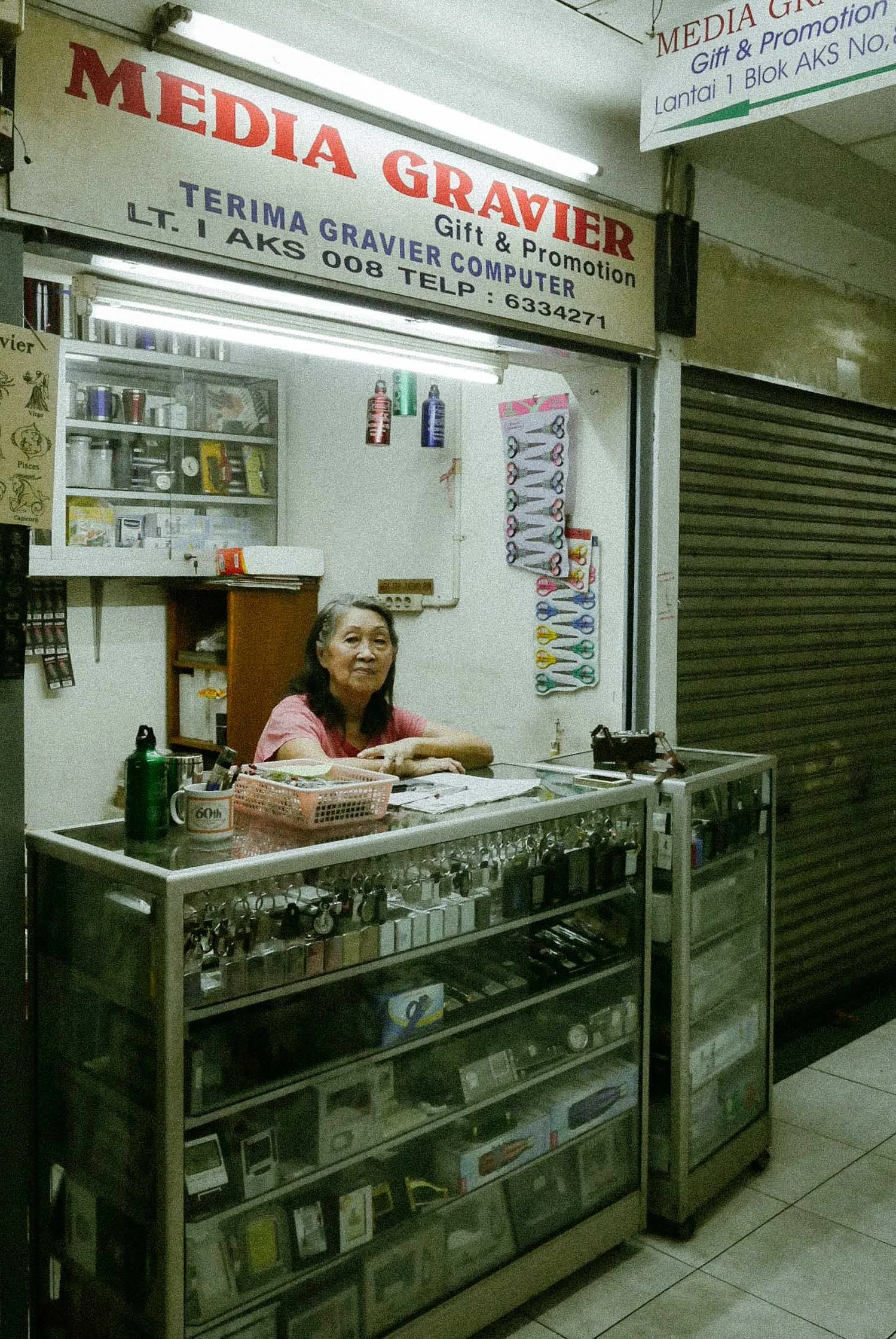
Back in 2018, John was just casually wandering around the first floor of the Glodok City building(Jakarta)—probably looking for nothing in particular—when he stumbled upon a humble little engraving shop named Media Gravier.
To be completely honest, John had absolutely no clue what the place was at first glance. Is it a stamp shop? A secret retro lab? Who knew. But there was something undeniably magnetic about the lady sitting inside. She had this fascinating, warm aura that practically screamed, "Come over and have a chat!" So, naturally, John did exactly that.
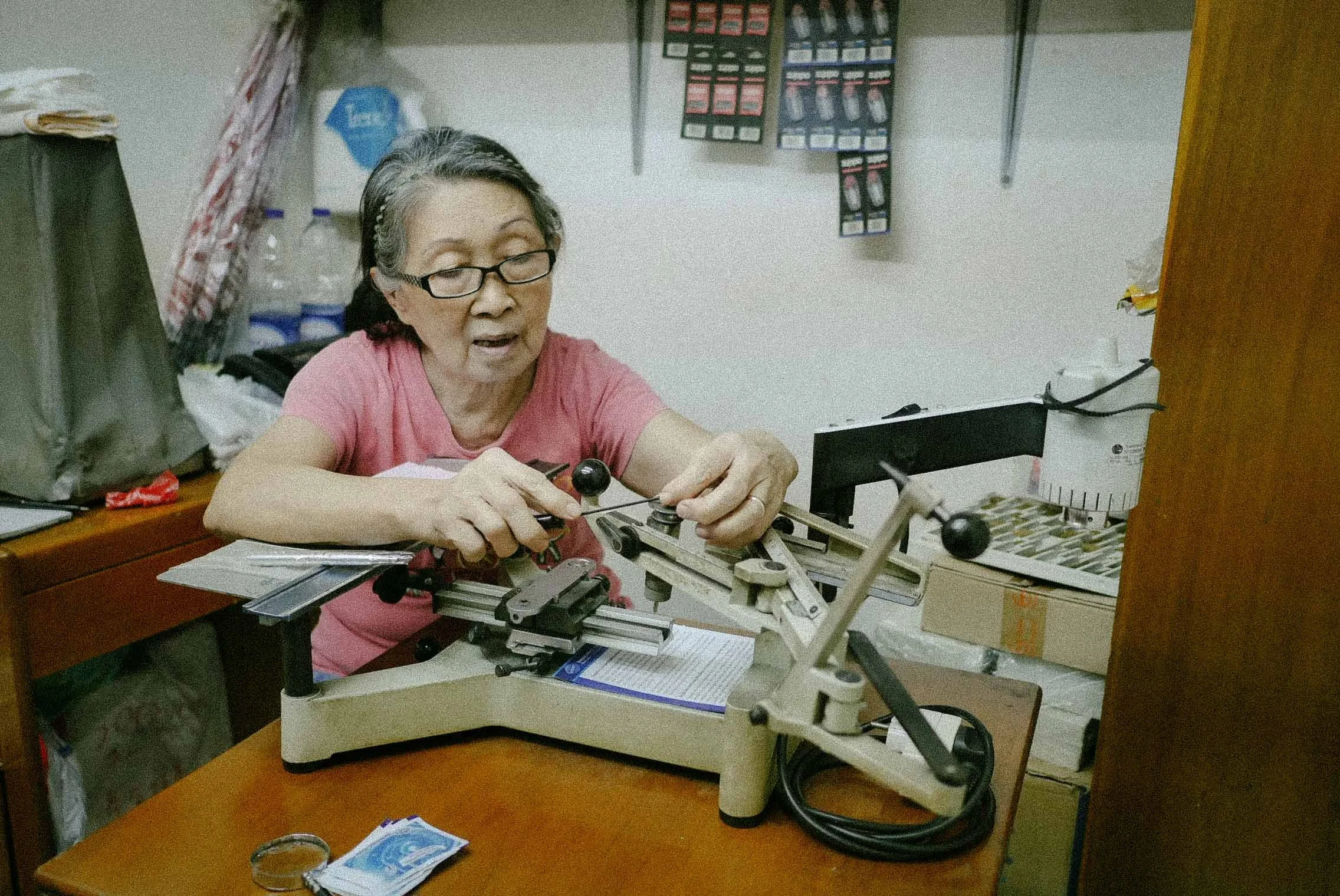
As it turned out, she wasn't just running a shop; she was a wizard of manual engraving, operating a majestic, purely mechanical pantograph machine. In a world obsessed with automated lasers and digital fonts, this place was a glorious glitch in the matrix.
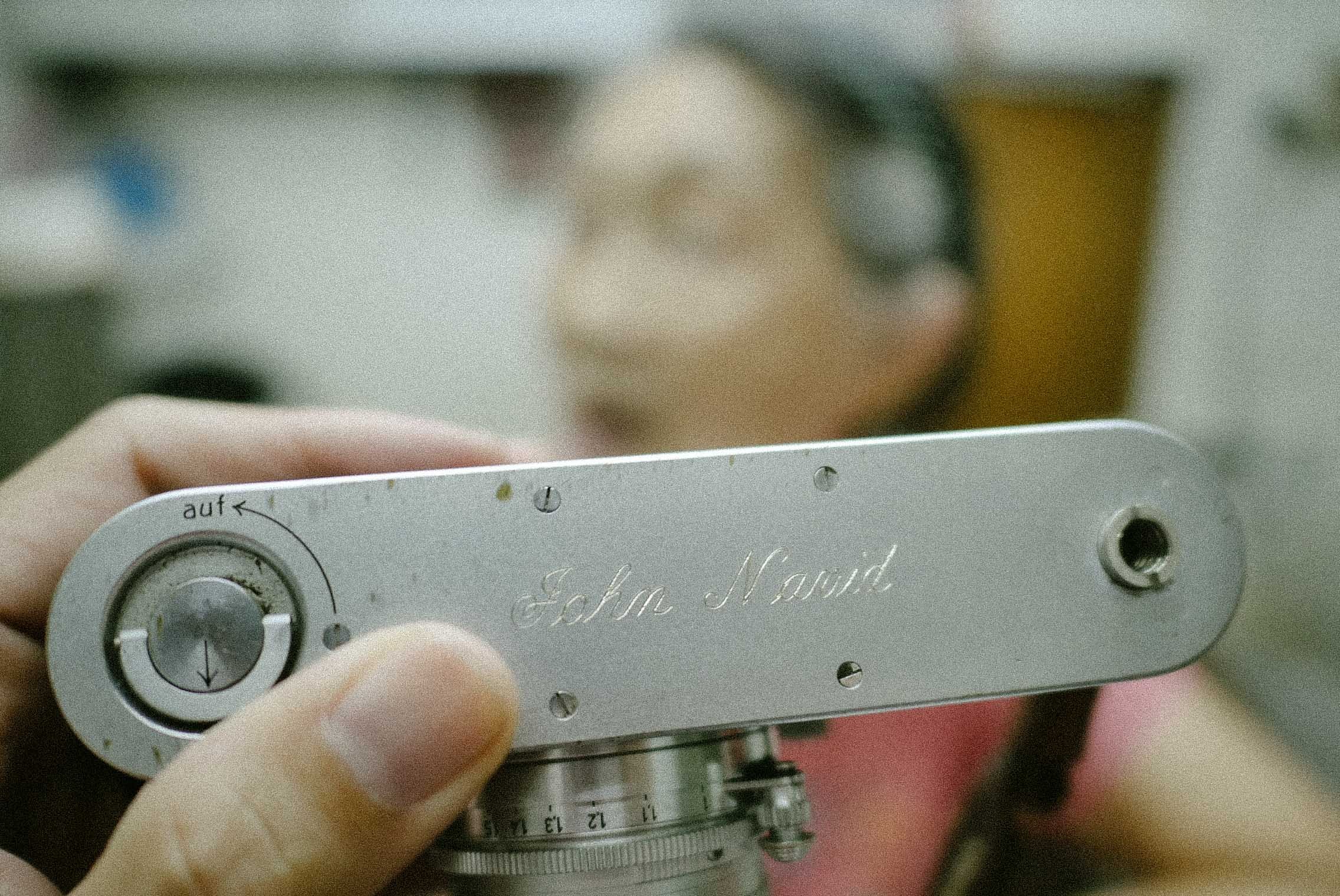
By a stroke of absolute camera-nerd luck, John happened to have his prized 1930s Leica III hanging around him. Looking at her old-school machinery, a wild spark of inspiration hit him. He popped off the camera’s bottom plate and handed it over. If a pre-WWII camera was going to get custom-engraved, it deserved to be done by someone using actual muscle memory, not a computer mouse.
Before starting the operation, the lady asked him to pick a font from her stash of physical master templates. John immediately went for the sleek cursive script. Why? Because it looked delightfully old-school and perfectly matched the "I-survived-the-1930s" aesthetic of his Leica.
Then came the plot twist that blew John’s mind. She casually mentioned that a regular metal bit wouldn't cut it for this job. No, the engraving stylus had to be tipped with an actual gemstone—a diamond. Talk about a fancy upgrade for a vintage camera.
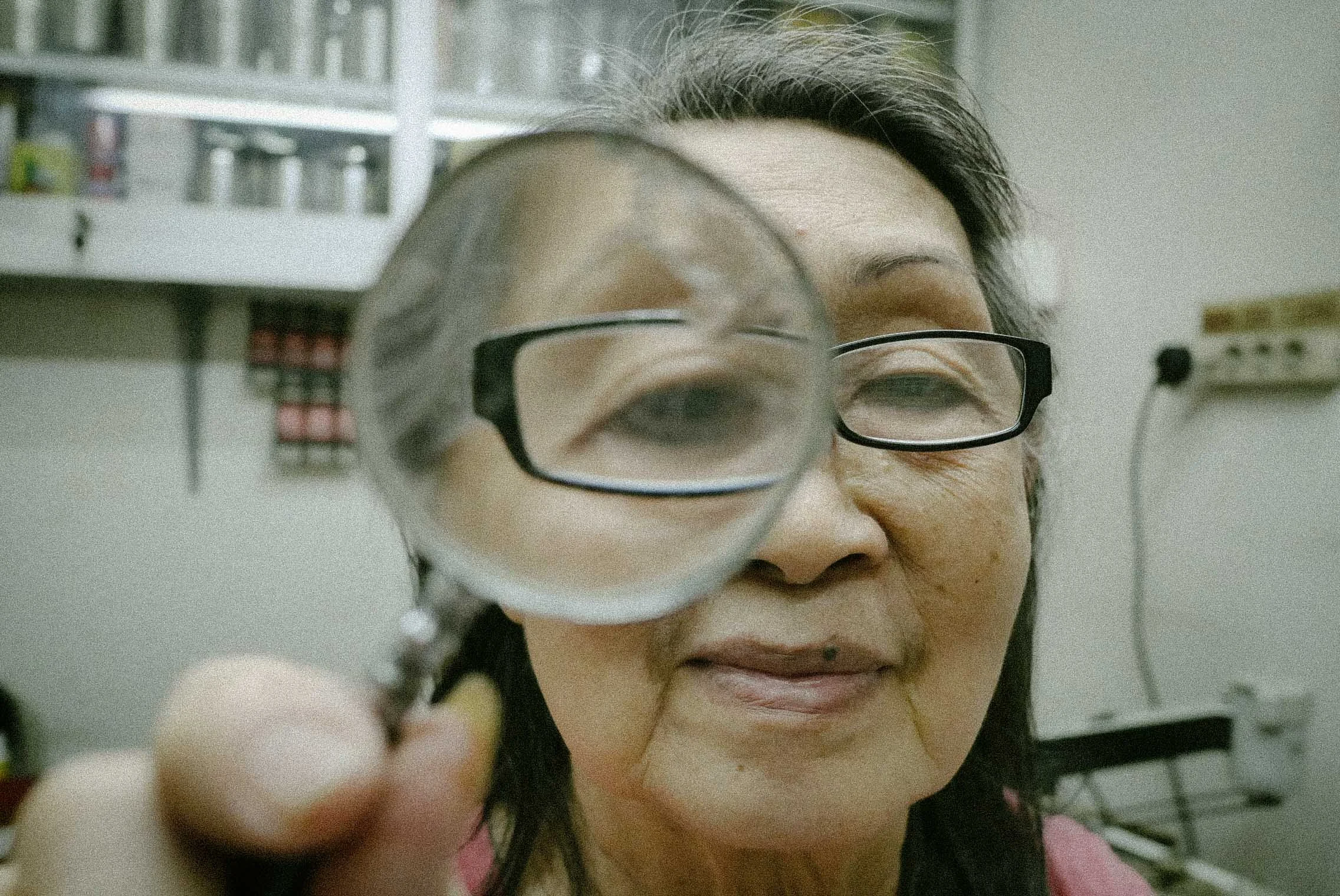
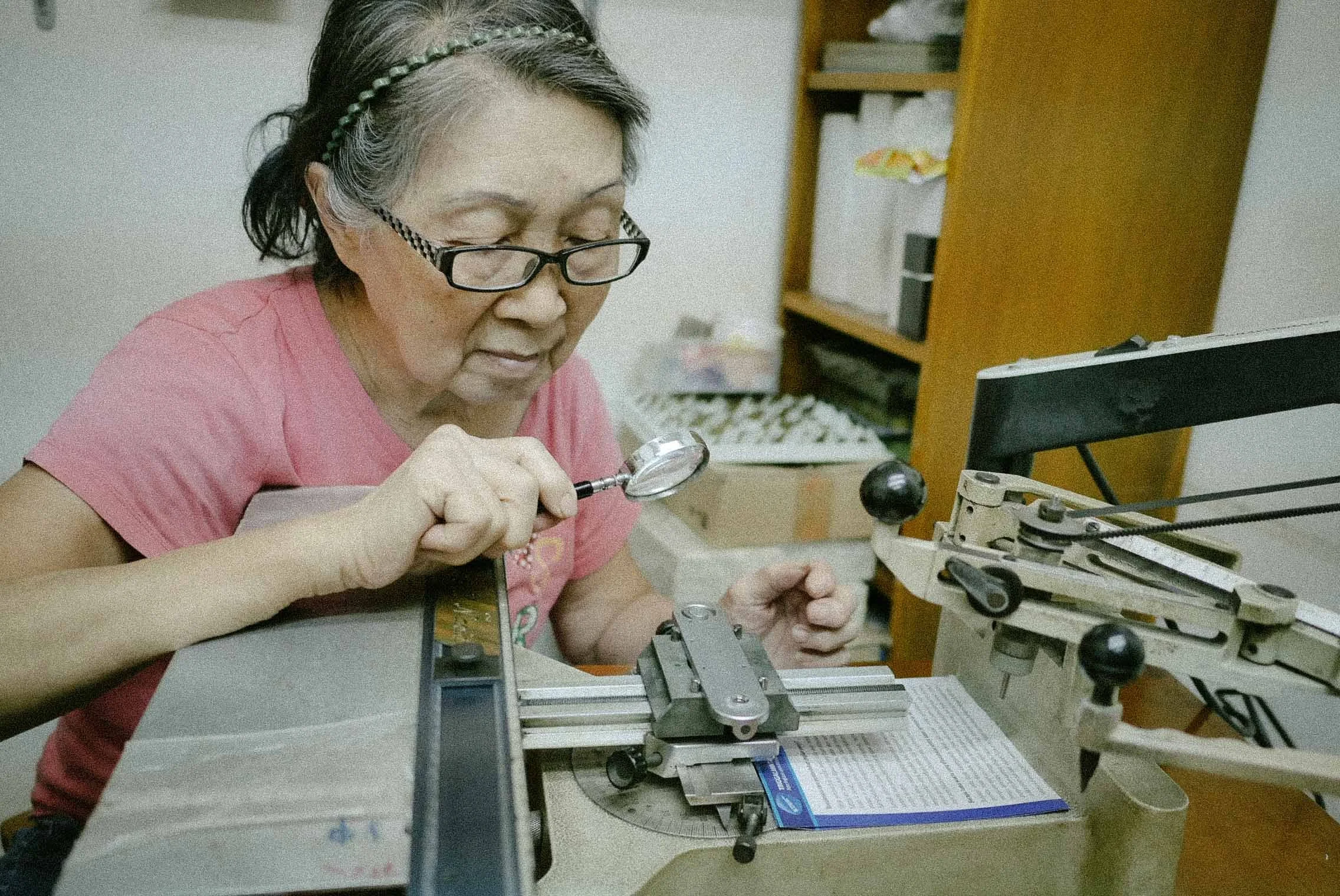
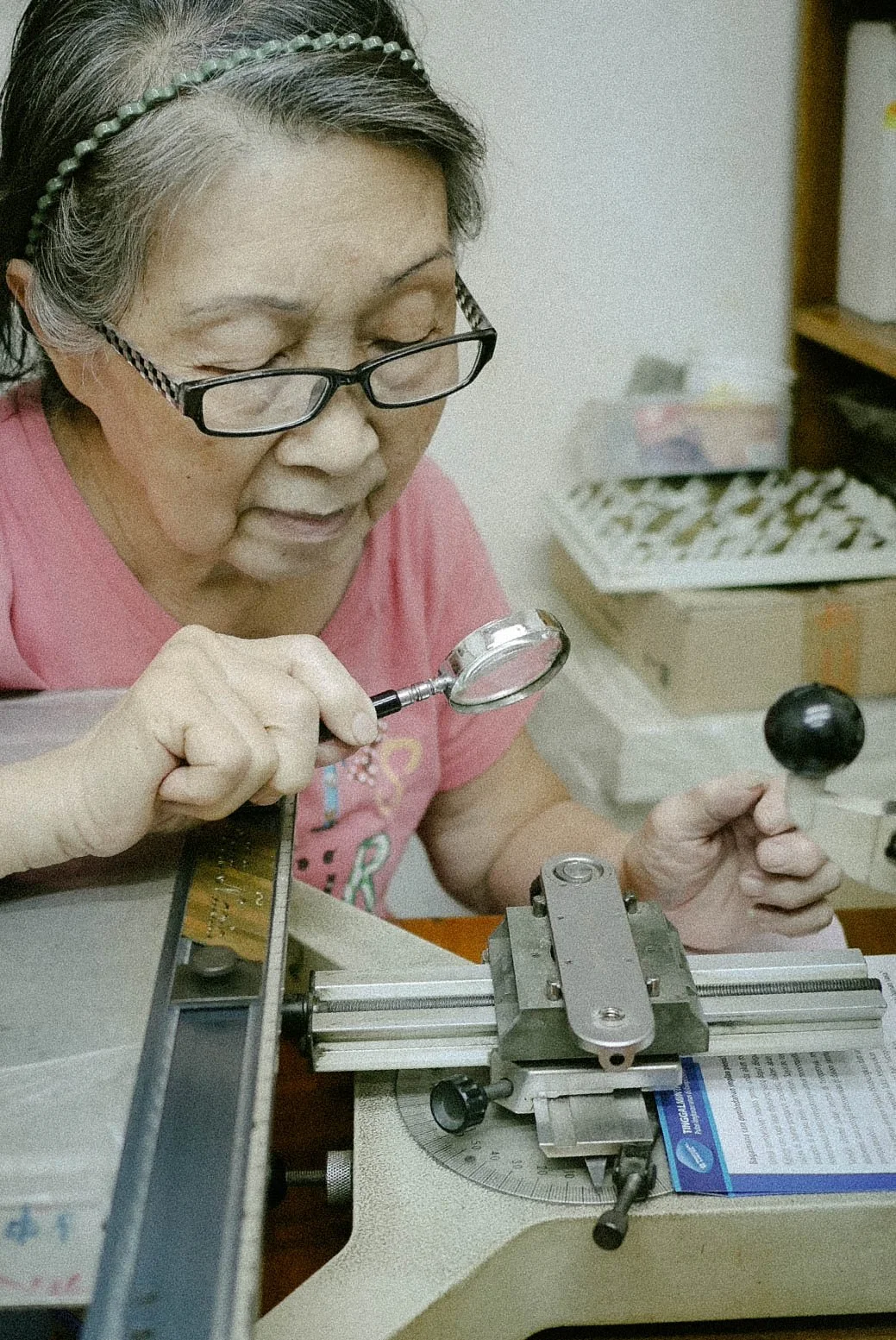
Watching her work was pure ASMR for the soul. Armed with a classic handheld magnifying glass, she squinted at the metal plate like a detective solving a high-stakes case, ensuring the alignment was pixel-perfect. There was no software, no automated lasers, and absolutely no "Undo" button—Ctrl+Z simply doesn't exist here. Her hands steadily traced the physical master letters while the mechanical arms mirrored the movement onto the Leica plate, relying entirely on a steady hand and decades of experience.
For John, this handmade process is infinitely more valuable than any modern laser engraving. A laser is sterile, precise, and endlessly repeatable. But this handmade work possesses a rare magic: even if she tried to duplicate it, the result would never be 100% exactly the same. Every microscopic variation carries a human pulse.
The result was absolute perfection. The name "John Navid" was now forever etched into the DNA of that Leica III, carrying a soulful character that a modern machine could never dream of replicating.
Years later, John went back to find the shop, only to find the shutters pulled down for good. The shop was gone, and rumors suggested the lady had either closed down or passed away. It was a poignant reminder of how quickly these quiet bastions of old-world craftsmanship vanish from Jakarta's streets. But on the bottom plate of a 1930s Leica, her dedication, a tiny piece of diamond, and a fleeting afternoon in Glodok City remain forever preserved.
Taken with: Lumix GX85, leica DG Summilux 15mm F1.7 ASPH
